
STRUCTURAL AUDITS
Deconstructing the intangible.
THE BCI AUDIT
The Definition.
A BCI Audit is a clinical diagnostic of
a brand’s structural integrity.
We do not provide creative ideas,
copywriting,or aesthetic advice.
We provide Credit Ratings for Sentimental Assets.
The Differentiation.
Unlike traditional marketing agencies that
focus on perception (what people say),
BCI Lab focuses on mechanics
(how the value is built).
We treat your brand as a dynamic energy system
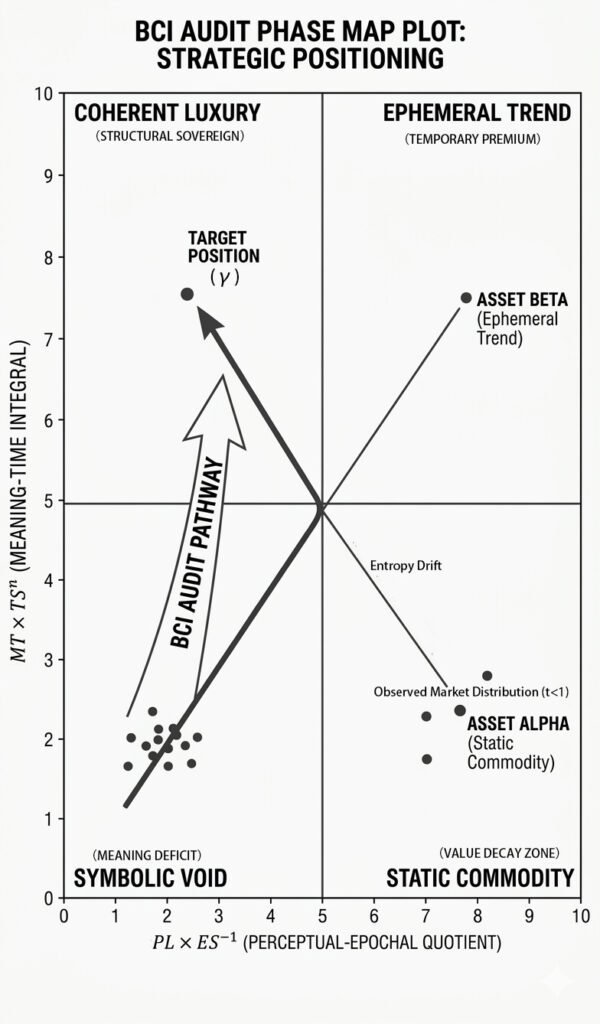
governed by the variables of MT, PL, TS, and ES. >
The Outcome.
We identify the exact point of Value Leakage
where your pricing power is being dissipated
by market noise or internal entropy.
THE INTELLIGENCE TERMINAL
Structural diagnostics and forensic backtesting for sovereign sentimental assets.

The Structural Snapshot
Protocol / Autonomy / Benchmarking
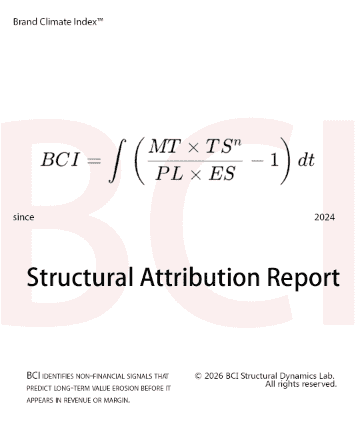
The Structural Attribution
Backtesting / Entropy / Systemic Decay
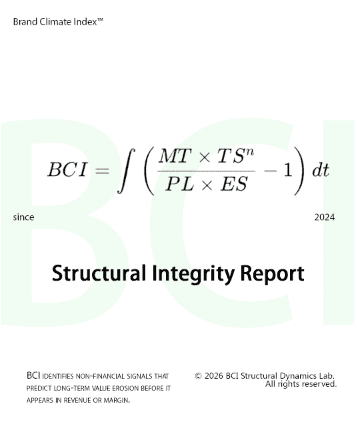
The Structural Integrity
Stress-Testing / Resilience / Capital Loading
| Classification | Audit Type | Temporal Scope | Diagnostic Objective |
|---|---|---|---|
| Category A | Structural Snapshot | Instantaneous (T₀) | Real-time "Status Reading" of pricing power and structural alignment. |
| Category B | Structural Attribution | Longitudinal (Past 4 Quarters) | Backtesting and variance analysis to identify sources of structural loss or premium erosion. |
| Category C | Structural Integrity | Simulated (5-Year Horizon) | Stress testing and failure mode simulation to assess long-term resilience and capital allocation efficiency. |
The BCI Audit Reliability Framework
Data Reliability Grade (DRG) The DRG is our proprietary institutional metric for quantifying the integrity of input variables. Each audit is assigned a grade based on data lineage, source convergence, and temporal proximity. A Tier-1 DRG requires a minimum of two independent data streams converging within a 5-10% variance band, ensuring that all BCI readings are auditable and reproducible under institutional review.
Confidence Band (±0.XX) Unlike traditional qualitative assessments, every BCI score is accompanied by a statistical Confidence Band. This represents the calculated volatility and margin of error within the current model version. The band ensures that structural diagnostics remain grounded in statistical probability, allowing governance bodies to hedge against latent structural noise.
BCI Quarterly Audit Reports
All reports are provided for informational and analytical purposes only and do not constitute investment, legal, or professional advice.



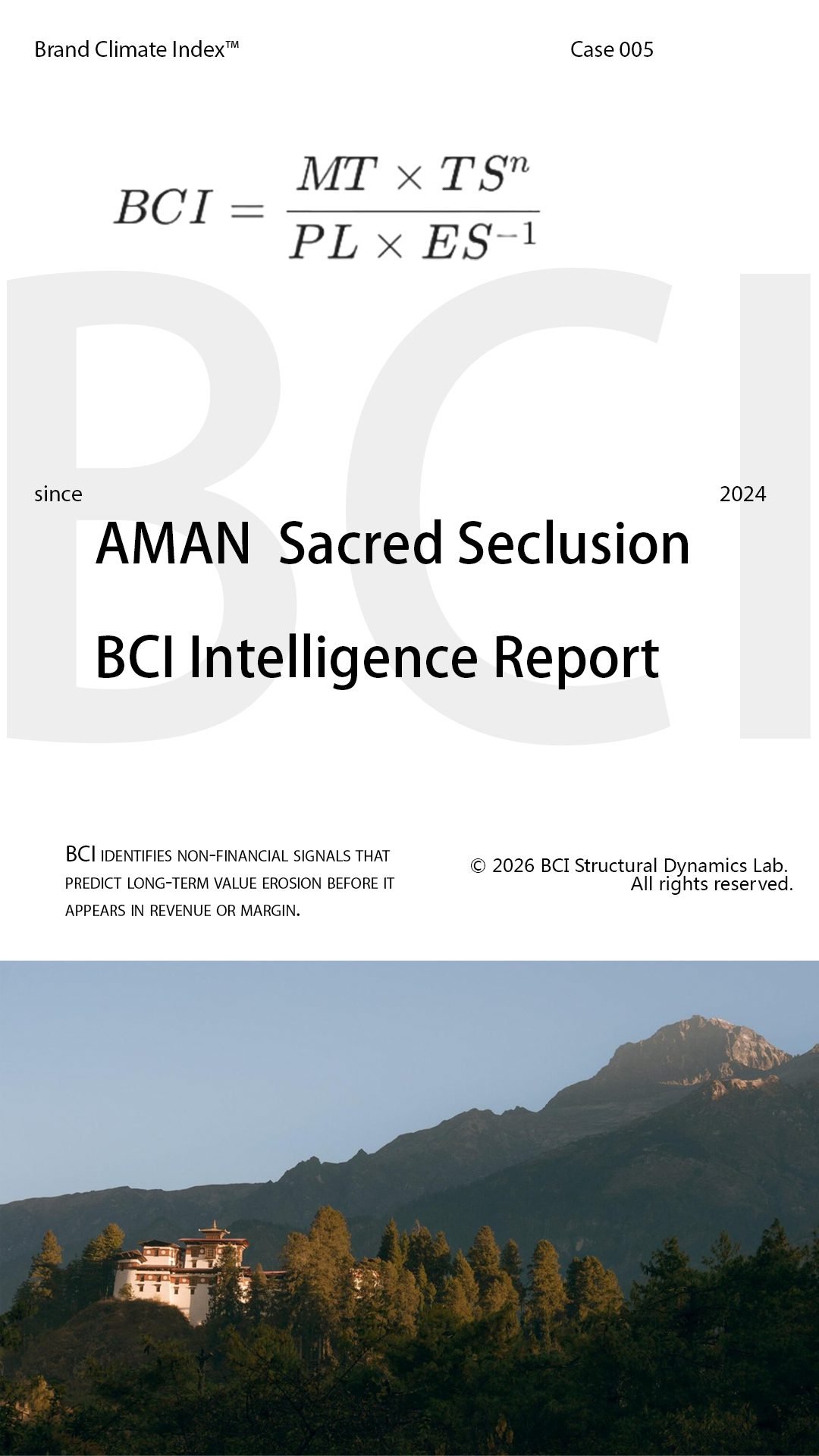
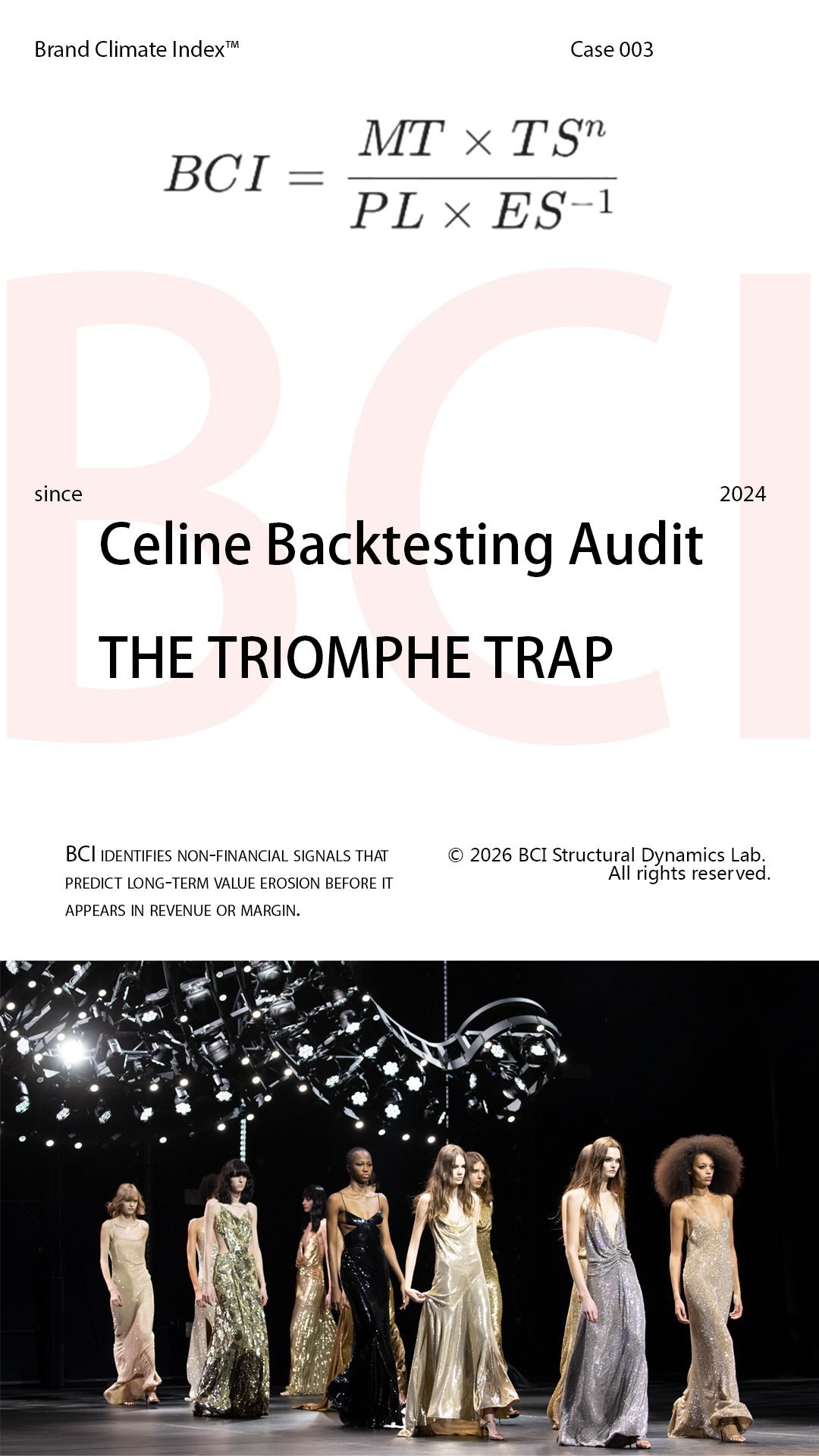












SECURED ARCHIVE
Restricted access for institutional clients only. Contains live risk heatmaps and pre-M&A structural due diligence samples.
4-STEP CLINICAL PROCESS
THE PROTOCOL
PHASE 01
INTAKE & SYSTEMIC SCOPE
Defining the asset’s time-horizon and historical trajectory.
We isolate the Target Dilemma—
whether it is a plateau in pricing power, a loss of cultural resonance, or preparing for a major capital transition.
PHASE 02
SIGNAL HARVESTING
A deep-dive extraction of raw data from your brand’s semiotic structure, architectural language, and interactive friction.
We remove the Marketing Bias to see the asset’s true energy state.
PHASE 03
STRUCTURAL STRESS-TEST
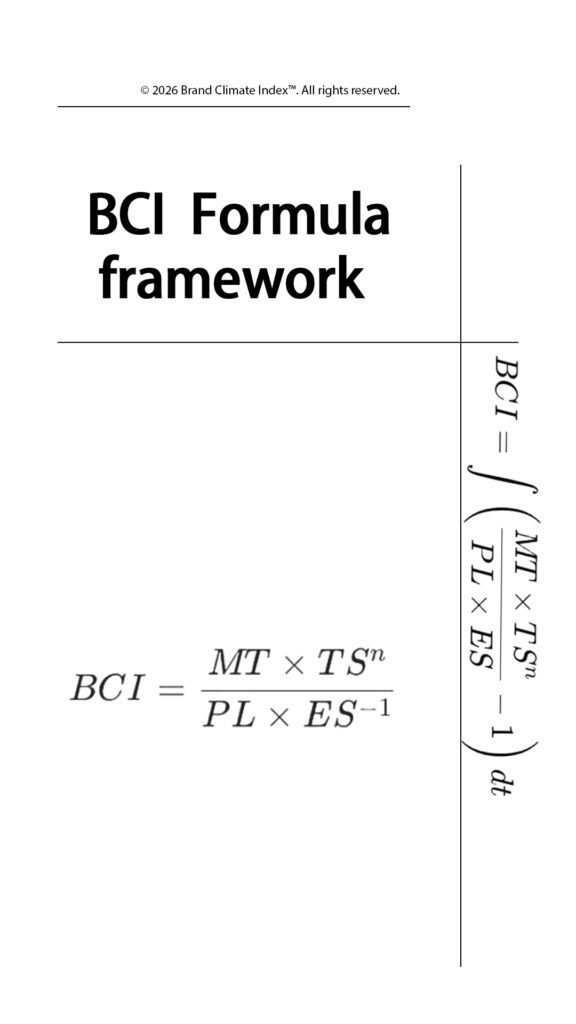
Applying the BCI Master Equation

We simulate how your asset performs against the Clock of Entropy to determine its anti-decaying capacity.
PHASE 04
DIAGNOSTIC ISSUANCE
The final synthesis. We translate mathematical modeling into a high-density Strategic Dossier
that dictates exactly how to restore or amplify your asset’s premium.
THE DELIVERABLES
WHAT YOU ACQUIRE
Every audit concludes with the delivery of the BCI ASSET DOSSIER,a 40+ page intelligence document containing:
1.The BCI Audit Scorecard
Your asset’s quantified rating (0.0 – 10.0) compared to industry benchmarks (Rolex, Hermès, etc.).
3.The Opportunity Gradient
A projection of your "Untapped Premium"—the exact pricing power you are currently leaving on the table.
2.Structural Risk Map
A visual heat-map identifying where your Meaning Tension (MT) is leaking and where Energy State (ES) is being depleted.
4.Strategic Directives
A non-negotiable list of structural realignments required to secure long-cycle resilience.
WHEN TO AUDIT
THE STRATEGIC PIVOT: You are moving into a higher price bracket or a new geographic market and need to ensure your “Meaning Gravity” can sustain the leap.
THE EQUITY PLATEAU: Your sales are stable, but your brand’s “Desire Coefficient” is cooling. You are becoming a commodity.
PRE-INVESTMENT / M&A: You are acquiring or investing in an intangible asset and need a “Due Diligence” report on its structural anti-decaying properties.
NARRATIVE ENTROPY: Internal teams are confused. The brand’s language has become “soft” and “generic.” You need to restore the hard logic of your value.
ELIGIBILITY & SELECTION
Institutional Constraint.
BCI Lab operates on a selective engagement model. We exclusively audit assets with Long-Cycle Ambitions.
We do not accept projects seeking “fast growth,” “viral hype,” or “short-term sales spikes.”
Our protocol is designed for those who intend to build Sovereign Assets that transcend the noise of the current century.
BCI Institutional Access Matrix
The Hierarchy of Observation: Rights, Roles, and Reciprocity
BCI maintains a strict stratification of data access to ensure the integrity of the Structural Resilience Rating (SRR). Each stakeholder tier interacts with a specific layer of the BCI Sentiment Engine, aligning structural diagnosis with their respective risk-hedging requirements.
| Tier Level | Stakeholder Category | Access Scope (SDR Depth) | Core Counterparty Value | Operational Mechanics |
|---|---|---|---|---|
| Tier I: Asset Sovereignty Portal | Brand Boards, Owners, & Group CEOs | Unrestricted SDR + Structural Remediation Protocol (SRP) | Sovereignty Recovery: Preventing the irreversible dissipation of brand premium and restoring pricing power. | • Internal Drift Monitoring: Real-time MT/PL divergence tracking. • Recovery Mandates: Direct strategic prescriptions for "Cognitive Friction." • Private Briefings: Quarterly deep-dives via encrypted BCI terminals. |
| Tier II: Institutional Risk Interface | Asset Managers, Hedge Funds, & LPs | SRR Alpha Signals + Threshold Rupture Alerts | Loss Defense: Identifying structural "Black Swans" and narrative bubbles 12–18 months before GAAP financial collapse. | • Resistance Level Alerts: Immediate notification on BB+ breaches. • Resilience Lattice: Cross-sector structural comparison for portfolio hedging. • Algorithmic Ledger: Historical backtesting access for predictive validation. |
| Tier III: Intelligence & Academic Lattice | Strategy Consultants, Think Tanks, & Scholars | Parametric Methodology + Global Calibration Lattice (GCL) | Knowledge Sovereignty: Accessing the scientific framework for quantifying sentimental asset integrity and macro-entropy. | • Macro-Entropy Reports: Global narrative tectonic shift analysis.• Methodology Transparency: Disclosure on n(Compounding Factor) weights.• Lattice API: Limited data-pulls for academic and structural research. |

Non-Actionability & Security Protocols
All interactions within the IAM are governed by the BCI Protocol V1.0.
Verification: Access is granted only after rigorous institutional KYC (Know Your Counterparty).
Confidentiality: SDR outputs are watermarked and cryptographically tethered to the authorized stakeholder.
Disclaimer: Observation does not constitute advice. BCI Lab serves as the Structural Blind-Spot Observer; all risk-taking remains the sole liability of the counterparty.
Verification Architecture: Access is not “purchased” but “authorized.” Every node in the IAM requires rigorous Institutional KYC and cryptographically signed NDAs.
Data Integrity: All SDR outputs are Dynamic Watermarked and tethered to the authorized stakeholder’s institutional identity.
The Non-Actionability Clause: Participation in any Tier of the IAM constitutes an acknowledgment that BCI Lab is a Structural Blind-Spot Observer. We provide the Cognitive Handrail; the counterparty assumes full liability for all market-facing maneuvers.
Institutional Inquiries & Structural Responses
BCI does not decode what people articulate; it decodes what the system is manifesting. Traditional research aggregates Attitudinal Variables (preferences, satisfaction, brand recall). These are lagging indicators of post-hoc human rationalization.
BCI models Structural Variables: Attention Flux, Emotional Energy Distribution, Narrative Density, and Cultural Tension. Analogy: Market research is a thermometer (reading the current state); BCI is a meteorological model (calculating the systemic evolution). BCI is designed to complement traditional research instruments; however, traditional instruments alone cannot substitute for structural modeling.
The model is built upon Quantifiable Structural Signals rather than intuition. Our inputs consist of cross-platform public signals, including:
- Narrative Entropy: The structural integrity of official and UGC content systems.
- Semantic Vector Shifts: The movement of emotional energy in consumer vernacular.
- Time-Series Decay: The rate of diffusion and rebound of cultural topics. Interpretive outputs are derived from the structural relationships among these signals.The system does not rely on intuition; it computes structural tension.
BCI is engineered for decisions characterized by high capital exposure and high irreversibility ,where conventional data fails. It is utilized for:
- Pre-emptive Risk Identification: Detecting structural rot before it hits the balance sheet.
- Non-consensus Opportunity Mapping: Identifying market shifts that have not yet been priced in.
- Capital Allocation Strategy: Determining whether a marketing investment is building an Asset (Compounding) or merely fueling Dissipation (Waste).
BCI model intentionally avoids point-based forecasting in favor of Structural Inflection Mapping. Long-term returns are not determined by short-term metrics, but by the accumulation of Emotional Capital and the maintenance of Meaning Tension (MT).
We identify the non-linear collapse points and the sustainability of a system’s pricing power. Rather than producing numerical forecasts, the model evaluates the structural conditions that generate financial outcomes.
While cultural content varies, Structural Dynamics are Constant. BCI models the fundamental constants of human systems: Attention, Tension, Scarcity, and Energy Exchange.These operate as cross-cultural structural constants, independent of specific cultural expressions.
BCI is a model of Market and Cultural Dynamics. It faces structural limitations in two scenarios:
- Exogenous Force Dominance: When non-market, administrative, or “hard power” interventions override systemic logic, the structural signals are temporarily suppressed by non-market administrative or coercive interventions
- Total Information Blackout: In environments where public signal feedback loops are completely severed, the model loses its sensory input. Note: BCI is designed to detect Structural Risk, not to predict exogenous force majeure events.
- Exogenous Force Dominance: When non-market, administrative, or “hard power” interventions override systemic logic, the structural signals are temporarily suppressed by non-market administrative or coercive interventions
BCI focuses on Slow Variables—the foundational layers of brand, trust, and cultural positioning. Fast-moving tactical tools are abundant in the market; however, they rarely account for the slow variables that ultimately determine long-term strategic outcomes. BCI provides the anchor in the storm of high-frequency noise.
BCI operates as perception infrastructure.. We are not a “report factory” or a suggestion system. We provide a structural coordinate system that supports high-integrity, autonomous decision-making.
The role of the system is to make latent structural dynamics observable.
INITIATE THE AUDIT PROTOCOL
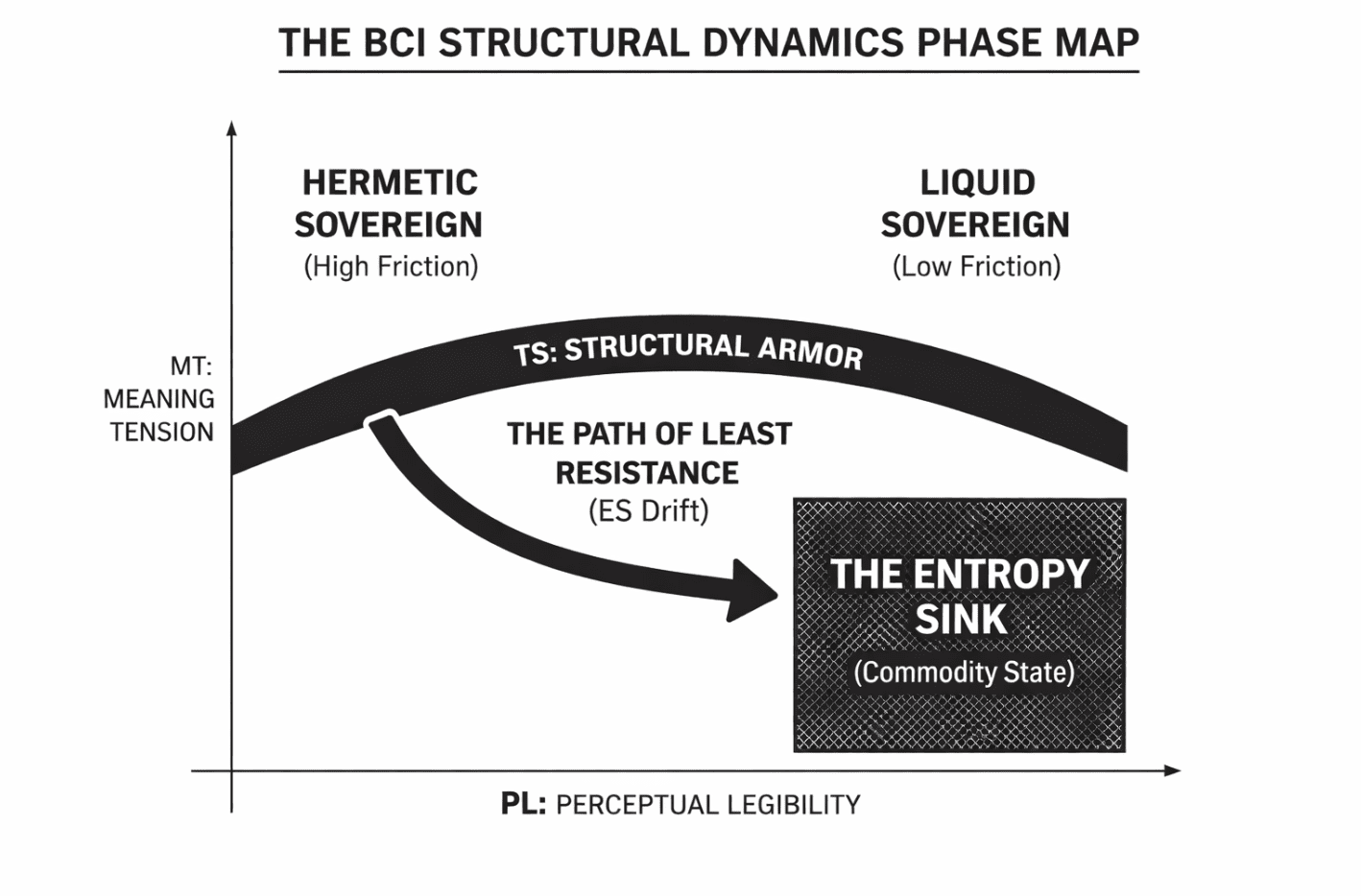
the BCI Structural Dynamics Phase Map — a practical grammar for how intangible assets behave under pressure.
The map treats brand, culture, and narrative as a kind of asset physics, with trajectories that are as predictable as capital flows when structure is absent.
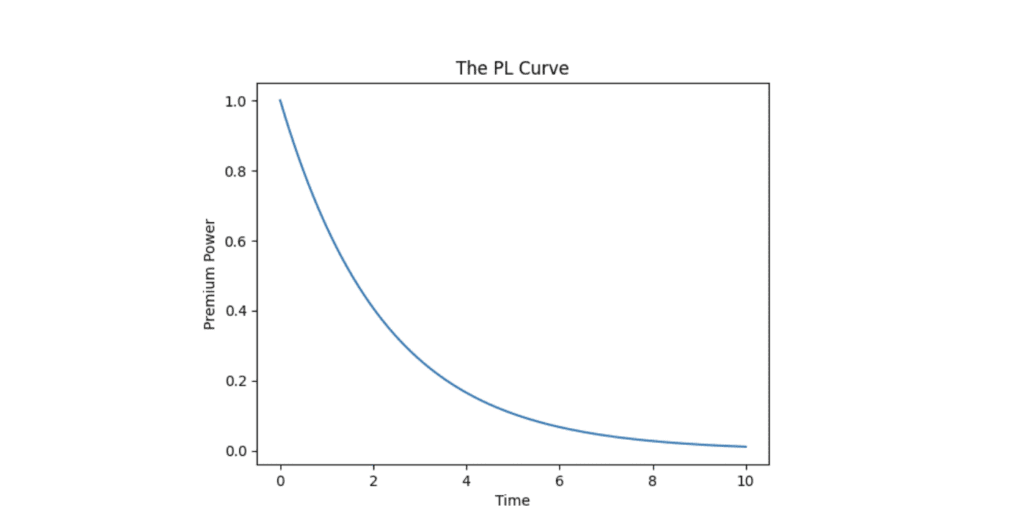
Without counter‑vailing structure, systems slide along a familiar gradient: ES rises as liquidity and legibility improve, PL trends higher as access friction falls, and MT — meaning tension — is quietly arbitraged away. The natural resting point of that process is the Entropy Sink, where assets trade as undifferentiated commodities.
Each axis is parameterized with observable proxies rather than metaphors: semiotic density in the field, SKU dispersion across the shelf, variance in temporal release cadence, and the degree of liquidity compression in secondary markets. These are not aesthetics; they are measurable state variables.
In this frame, sovereignty is not a slogan but a kinetic condition. It exists only when a structure can continuously hold an asset at altitude against its own liquidity.
TS — temporal structure — is the relevant form of structural armor. It is the only mechanism we repeatedly see that both dampens ES acceleration and preserves high‑altitude pricing power while the system remains highly legible.
Across longitudinal panels, accelerated ES drift reliably shows up as a leading indicator: it often appears several quarters before visible gross‑margin compression, long before the P&L tells the story.
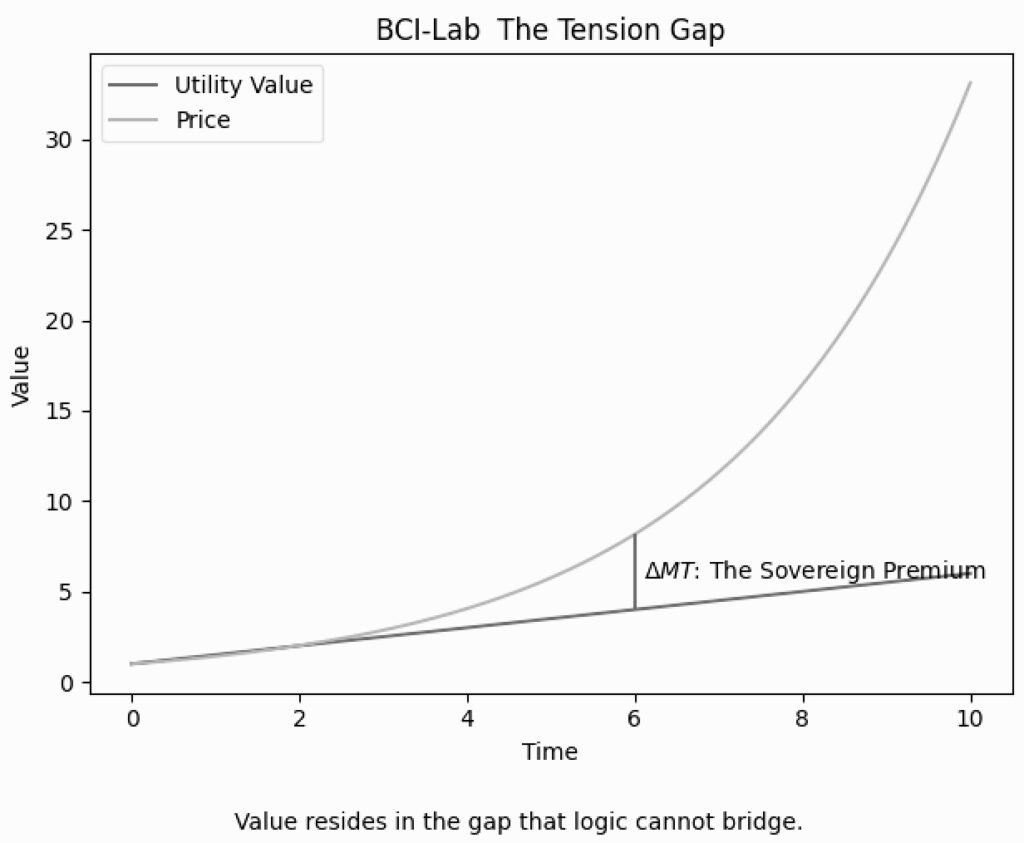
BCI therefore defines structural sovereignty as the ability to sustain elevated MT under rising PL without triggering ES acceleration. In other words, to increase visibility without quietly selling off the tension that justifies premium economics.
Capital is quite efficient at pricing visibility. What markets rarely price correctly is structural tension — the architecture that keeps an asset sovereign instead of letting it sink into industrial clutter.
Strict Confidentiality Guaranteed. Standard review period: 72 hours.
Confidentiality is the bedrock of our protocol.
BCI Structural Integrity Protocol (SOP) Library
1.De-personalization
Removing subjective institutional noise to achieve clinical objectivity.
2.Quantifiable Thresholds
Every structural diagnostic is traceable to financial line items or verified quantitative proxies.
3.Indefensible Knowns
We provide the auditing tools to eliminate “defensive ignorance,” enabling governance layers to make informed, risk-adjusted decisions.
The Sovereign Partnership
For those who build for the century.
BCI Lab partners with entities that seek Sovereignty over Visibility.
If your objective is to transform a lifestyle label into a Sentimental Asset with compounding credit,
let us initiate the diagnostic. Precision is the only path to the premium.

Confidentiality is the bedrock of our protocol.