Institutional Summary
- Document Ref: SAR-2026-CHM-003
- Audit Standard: BCI Structural Integrity Protocol (BSIP) v2.0
- Asset Base Classification: Historical Sovereign Asymmetry
- Service Tier: Category B – Structural Attribution
- Data Reliability Grade (DRG): Grade B (Sector Proxy & LVMH Disclosures)
- Data Cut-Off Date: 2026.01.31
1. Strategic Anchor
The asset structure of Chaumet is identified as Historical Sovereign Asymmetry. The system demonstrates a high degree of symbolic depth—anchored in Napoleonic-era sovereignty—offset by quantifiable perceptual friction in contemporary energy exchange. Model outputs indicate a high-retention, low-velocity structural configuration, where the concentration of “Narrative Verticality” (Tiara/Imperial iconography) provides a robust sovereignty floor but limits lateral legibility for mass-market conversion.
2. Quantitative Structural Mapping
The asset’s premium power in Category B is quantified via the BSIP dynamic integral engine:
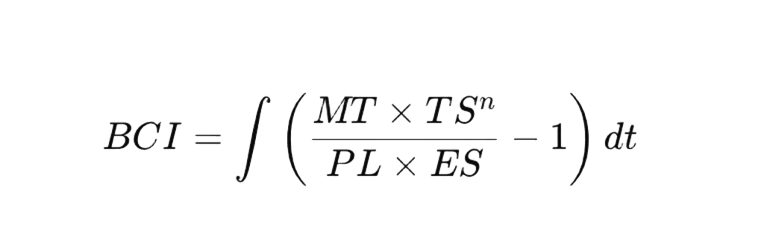
Note: Unlike Category A (Static Snapshot), Category B utilizes the integral dynamic engine to capture structural variance and directional momentum over a rolling 4-quarter window.
| Dimension | Reading | Institutional Definition | Financial Mapping (CFO Interface) |
| MT (Meaning Tension) | 9.2 | Gravitational pull of the signifier system. | Goodwill stability / Pricing power floor. |
| PL (Perceived Legibility) | 6.8 | Cognitive friction coefficient (Inverse Scarcity). | Gross margin protection / OPM. |
| TSⁿ (Time Structure) | 9.4 | Exponential compounding via historical duration. | Residual value preservation / LTV. |
| ES⁻¹ (Energy State) | 7.2 | Systemic efficiency of energy exchange. | Operating efficiency / Revenue velocity. |
Disclaimer: All readings are internal methodological references for structural diagnostic purposes only.
3. Structural Trajectory & Attribution
Model output identifies a Plateau Stabilization Phase. The historical variance is attributed to the following structural drivers:
- Narrative Verticality: The intensity of the “Imperial” symbolic anchor reinforces MT but creates a high narrative entry threshold, resulting in a systemic accumulation of potential prestige rather than kinetic transactional volume.
- Historical Inertia: A legacy base of 240+ years contributes to exceptional TS stability, though it presents a constraint on the velocity of adaptive narrative updates.
- Conversion Friction: Below-median PL readings suggest that the “Interface” of the asset requires optimization to translate symbolic sovereignty into social engagement without inducing narrative dilution.
Trajectory Overview (LTM):
| Period | BCI Score | Δ Reading | Structural Trajectory Description |
| 2026 Q1 (A) | 8.15 | -0.02 | Seasonal calibration: MT density remains stable. |
| 2025 Q4 (A) | 8.17 | 0.05 | Baseline consistency in Hard Luxury beta. |
| 2025 Q3 (A) | 8.12 | 0.01 | Base line consistency in Hard Luxury beta. |
| 2025 Q2 (A) | 8.11 | — | Structural baseline established. |
4. Governance & Legal
- Rating Limitation Clause: This document does not constitute a credit rating, securities analysis, valuation report, or investment recommendation.
- Jurisdictional Limitation: Governed exclusively by the laws of the Hong Kong Special Administrative Region (HKSAR).
Authorized by:
BCI Governance Committee
Under BSIP v2.0 Institutional Release Standards